Long Drops Before LongHouse
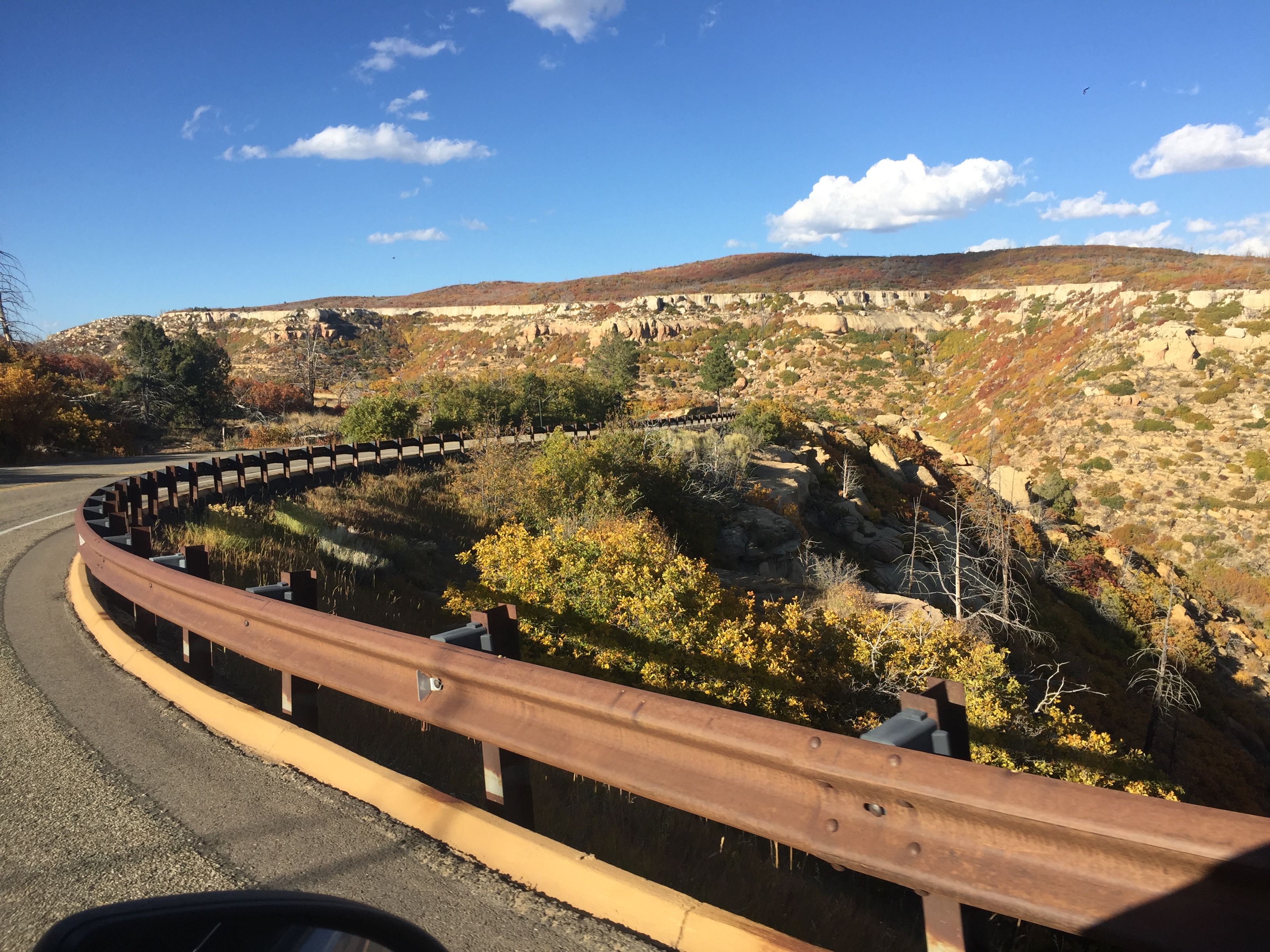
I described the drive to Mesa Verde’s Chapin Mesa as sinuous and undulating. By comparison the drive to the end of Weatherhill Mesa was driving freestyle on a paved roller coaster track. One stretch reminded me of those photos you see of mountaineers trudging up razorback ridges on their way to some frozen summit.
As our little car worked to climb that grade the road ahead emptied into the clear blue sky. Behind us the sun-shined pavement dropped precipitously and on either side the mountain fell steeply away. I couldn’t tell how long the drop. The road demanded too much of my attention and the sides dropped too quickly and far to allow an estimate beyond “Oh hell!” It made me acutely aware of the sounds of the engine, the gauges and how far the emergency brake was from my right hand. Going up the first big hill on a roller coaster I’m not afraid of the drops and curves ahead, but of the chain breaking and our car being dropped backwards into neck-snapping agony. Same here. We don’t have any photos of that short section because we were both too intent on insuring our success with white knuckled grips and clenched teeth. (We’re not good with heights.)
Whether curve or climb, each time though, we made it. (Really, the little Smart never seemed to struggle, even at altitude. Occasionally, it just needed some more time.) Climbing long ascents on interstates and two lane black tops we often took the passing lane around slowing semis and pick-ups. It was okay. It was us. There were a few places on Mesa Verde’s roads where there were breaks in the guard rails that we explained by imagining some unfortunate driver mangling it on his way over the edge and the Park Service removing the evidence. So, see, success was not assured!
Okay, on to LongHouse. I’m making it bicapitalized because I’ve seen it all three ways: two words, bicapitalized and one word. I’m too lazy to look it up and this seems the middle ground (MiddleGround?)
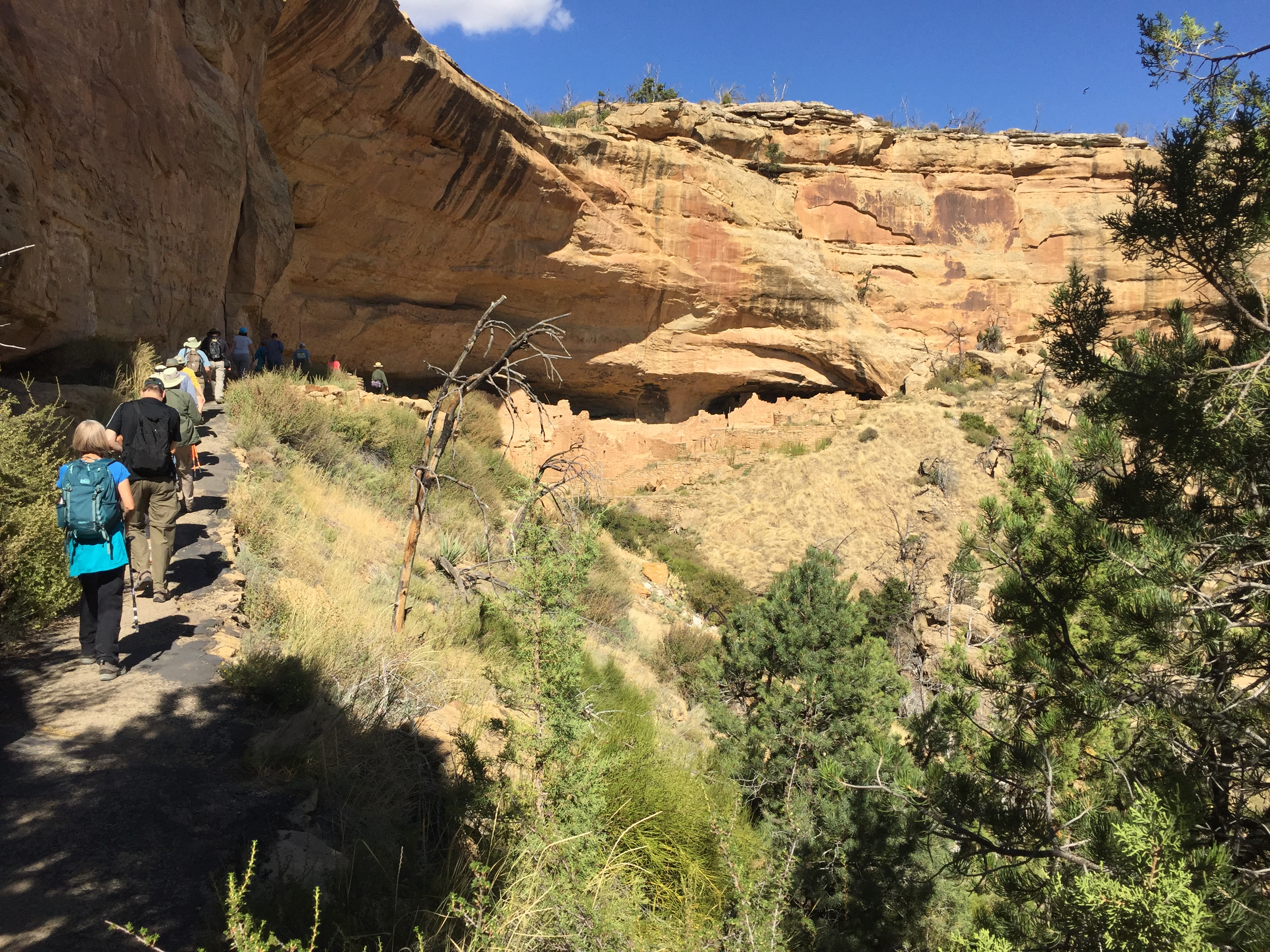
LongHouse was built in the 1200s by the ancestors of the Hopi and Navajo on the ruins of pit houses from 500 years earlier (Shown below). Dust blows constantly in the desert and rubble repeatedly falls from these high sandstone cliffs so previous occupations are in archeological time “quickly” hidden. Fashioning larger stones fallen from the roof and chinking them with pebbles they stacked walls and sealed them with mortar mixed from local dirt, dust and water.
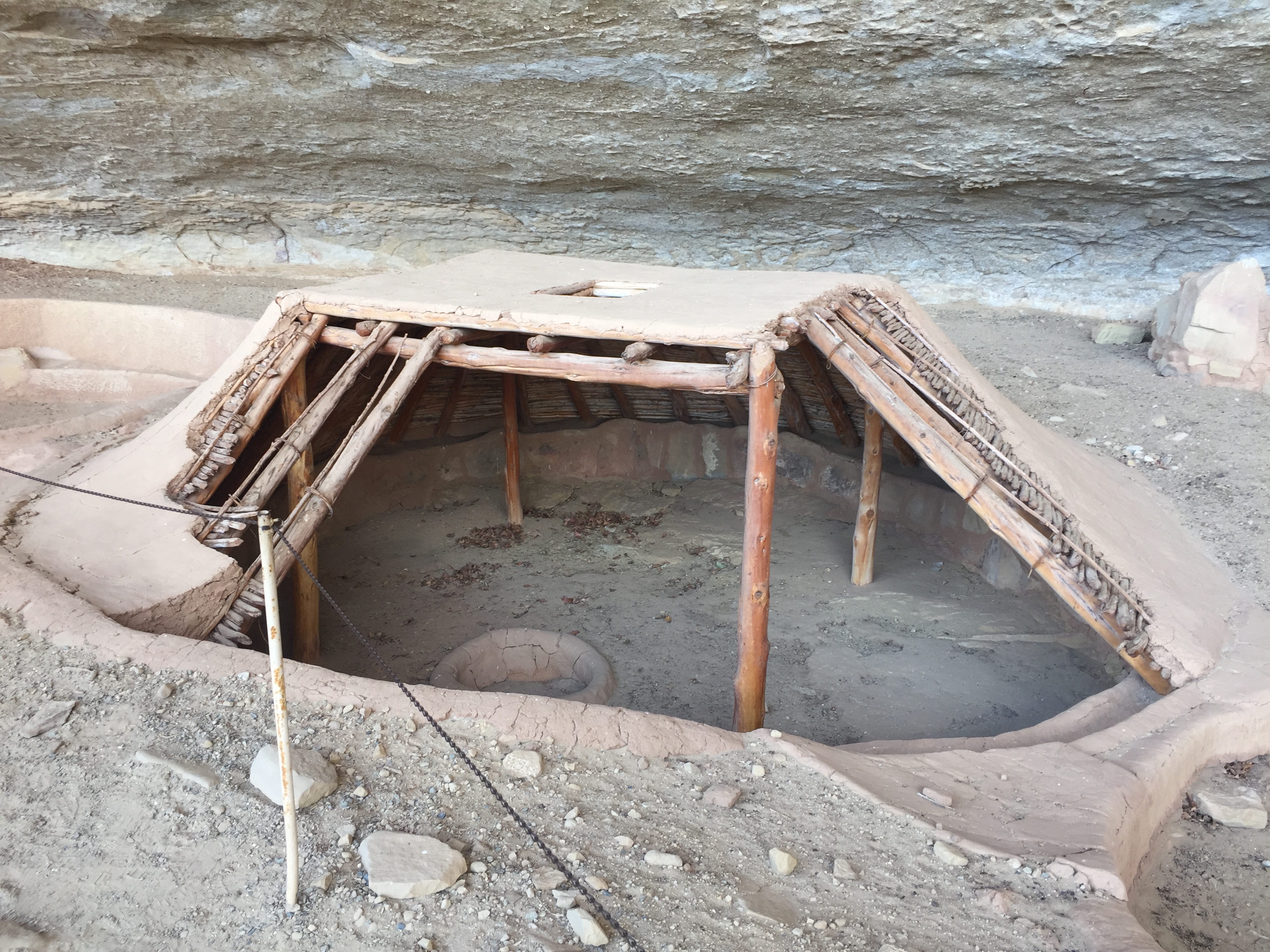
A moments digression on water. Some rain, of which about fifteen inches falls each year in this area, is held by the soil on the top of the mesa. Some of that then seeps into the underlying sandstone and sinks until it hits a harder, less permeable layer. I suspect those less permeable layers often form the floors of these large open caves. The soft sandstone above those layers being eroded by the water and eaten away by the wind. This would explain the seeps we saw in the backs of the LongHouse and were told of in the backs of others. There is such consistent water that moss and small plants grow at the seam of ceiling and floor. Short finger-width channels leading to ladle-sized pools were chipped into the sandstone from the back wall/ceiling. Gourds would be cut, scraped and hollowed out to scoop up cups of this water.
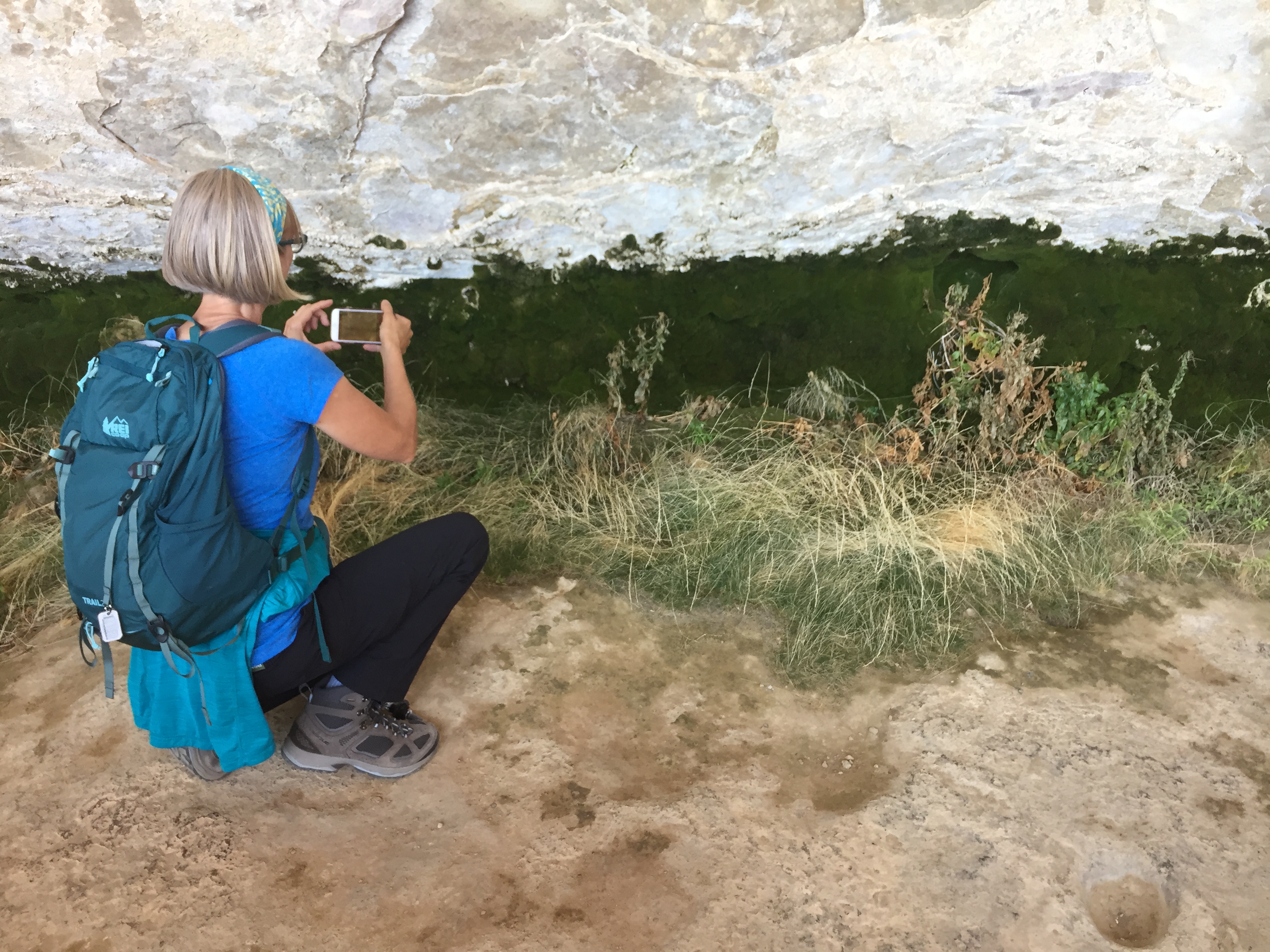
Any greater amounts of water would have to be carried from the river on the valley floor a hundred or more feet below on the backs of inhabitants. Considering that task, possibly they also created cisterns and guided rainfall into them. Mortar for construction would surely have required more water than the seeps provided. I wonder if they used urine for construction. In the sun it would soon lose its smell, I think. (I don’t have a lot of experience with this.) But, they’d already carried the water into the cave, needed water and didn’t have incoming or outbound plumbing, so . . . ?
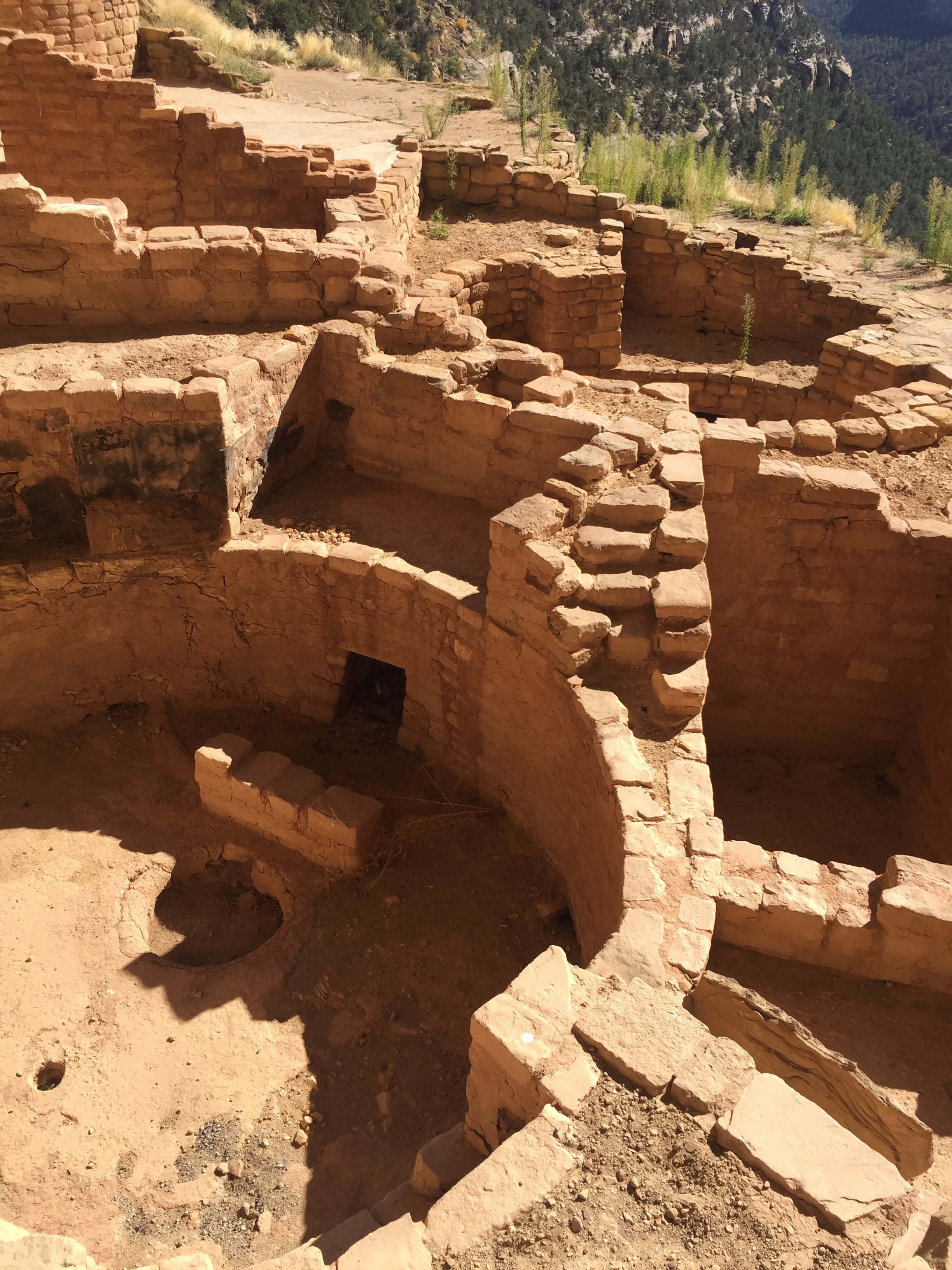
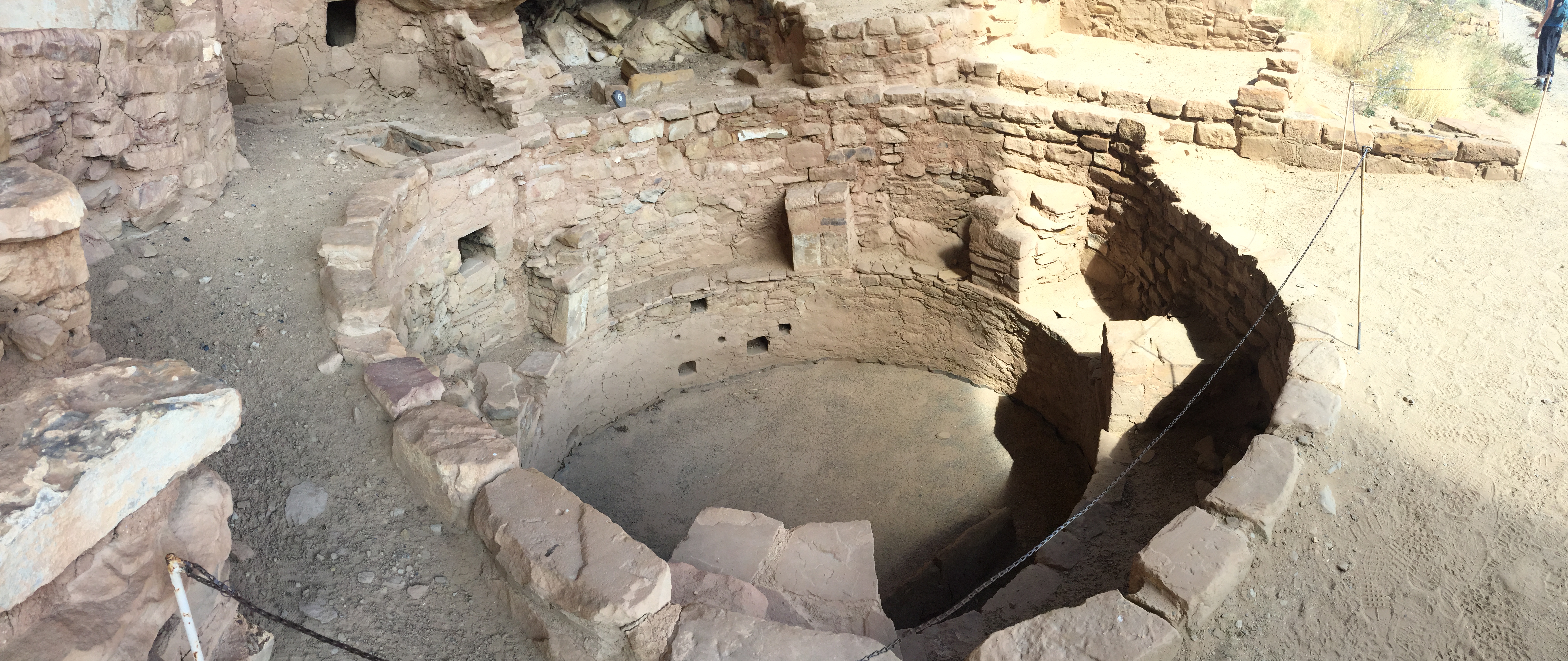
There were a hundred and fifty rooms in LongHouse – which is about 300 ft long – and they say, (by a couple of feet) the second longest in the Mesa Verde park. The rooms are in several stories, vary in size and are often irregular in shape. They think there may have been seventy-five to over a hundred inhabitants. Some larger rooms were called Kiva, a Hopi word for ceremonial room (kind of like the Pope room at Bucca di Beppo only with less levity). Usually round, these rooms were gathering places with clean air intake vents and square exhaust vents in the center of the ceilings. These rooms were also entered and exited by ladder via that same center ceiling vent. The roofs of the relatively large flat ceilings were thought to be work or trading spaces.
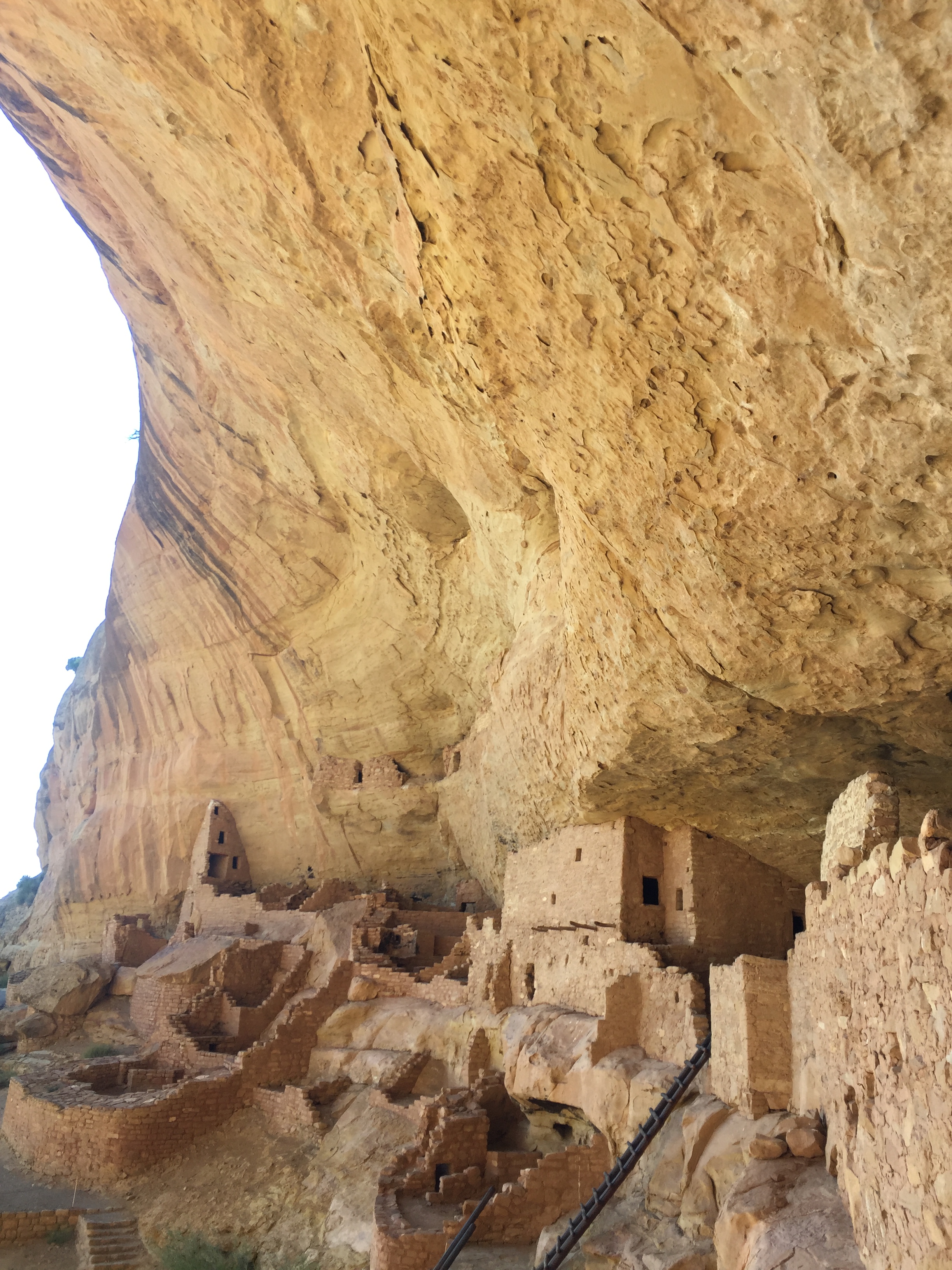
The LongHouse was only occupied for about one hundred years. During this time the occupants hunted, trapped, gathered and farmed on the mesa above. At first, it may have been a time of relative plenty. There were several hundred dwellings, storage facilities and burial sites around the area. However, scientists studying tree rings have identified a cool, dry spell near the end of the 13th Century that lasted many years. It likely over taxed the stores the house builders had laid back and drove them off the cliffs and south; where they divided into several tribes. Point of interest, the lifestyle of the fabled Plains Indians also only lasted only about a century from the appearance of wild horses descended from the mounts of the Conquistadors to the destruction of the buffalo herds by white men. It shows how resourceful, inventive and adaptable the native Americans were.
 Xsplorin